Imagine living in a world where simply being yourself could get you arrested.
That was the reality for LGBTQ+ people in the 1960s. Back then, being openly gay, lesbian, bisexual, or transgender wasn’t just frowned upon—it was illegal in most places. Police would regularly raid bars where LGBTQ+ people gathered, just for daring to exist and have fun together.
Life Before Pride
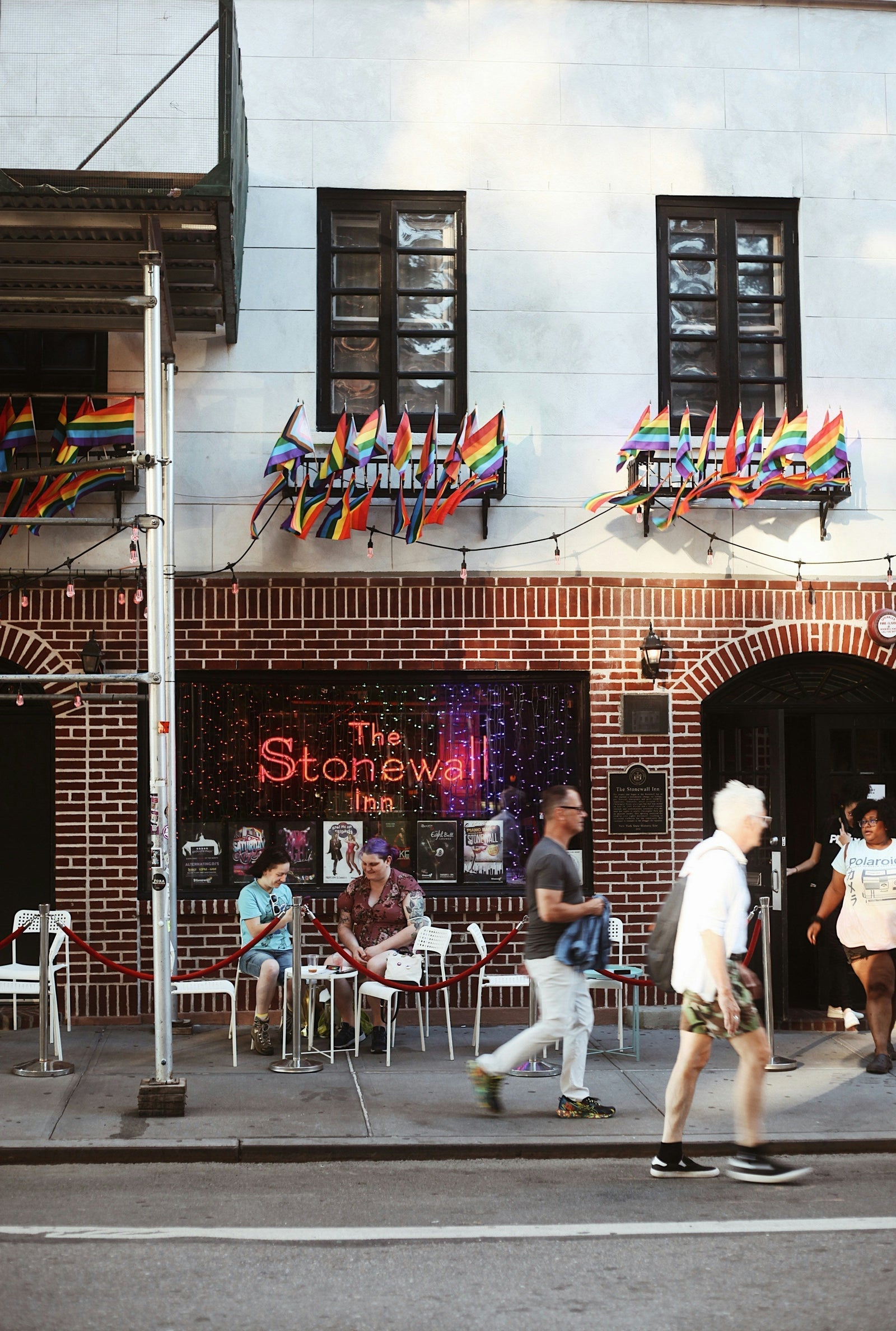
Gay bars like the Stonewall Inn in New York City’s Greenwich Village were more than just places to grab a drink—they were safe havens for people who didn’t feel safe anywhere else. The Stonewall Inn wasn’t fancy: it was a bit run-down, but it welcomed everyone, especially those who were often excluded elsewhere: transgender people, drag queens, people of color, and young folks who had nowhere else to go.
But even these safe spaces weren’t truly safe. Police raids were common. Officers would storm in, turn on the lights, line everyone up, and arrest people for “breaking the rules.” Most nights, people would try to stay calm and hope it would be over soon.
The Night Everything Changed
But on June 28, 1969, something was different. When police raided the Stonewall Inn that night, the crowd decided enough was enough. People refused to show their IDs, some fought back, and a crowd gathered outside, growing bigger and bolder with every minute.
Stormé DeLarverie, who was there that night, later said,
“It was a rebellion, it was an uprising, it was a civil rights disobedience—it wasn’t no damn riot.”
People started chanting, throwing coins and bottles, and standing up for their rights. The police were shocked and ended up barricading themselves inside the bar as the crowd outside demanded justice. The protests lasted for days, with more and more people joining in. Thirteen people were arrested that first night, and the Stonewall Inn was nearly destroyed, but the spirit of the community was stronger than ever.
The Birth of Pride
Stonewall wasn’t the first time LGBTQ+ people fought back, but it was a turning point. It inspired people to organize, speak out, and demand equal rights. New activist groups formed, and just one year later, on June 28, 1970, the very first Pride march took place in New York City, marking the anniversary of the uprising. That march became the tradition we now know as Pride Month, celebrated all over the world.
“The bottom line was, we weren’t going to go away. And we didn’t.”
Why Stonewall Still Matters
Stonewall showed the world that LGBTQ+ people wouldn’t be silenced anymore. In 2016, the Stonewall Inn became the first U.S. national monument dedicated to LGBTQ+ rights and a powerful reminder of how far we’ve come and how much further we can go.
Pride is about celebrating who you are, remembering those who stood up for equality, and continuing the fight for a world where everyone can be themselves: no exceptions.
A practical guide to SVAKOM masturbators: shared steps for any sleeve, then how to choose between Hedy X, Robin, Sam Neo 2, Alex Neo 2, and Hannes Neo.
Orbiting is one of the many modern dating terms that has emerged in the age of social media, and it can leave people feeling confused about what someone's intentions really are.
On Onda Cero’s Lovin’ You, SVAKOM’s Iker Pérez and Estef Palacios talk female sexuality, oral pleasure, and the cat-shaped toy that stole the show—Klitty, now sold out across Europe.
Femdom is consensual female-led dominance, not cruelty. This guide explains the meaning, the conversation to have first, three starter scenes you can actually follow, and aftercare for both people.
Discover Estef Palacios, a leading Spanish-speaking sexologist and sexuality educator known for making sex education approachable, honest, and empowering. Learn about her journey, professional background, and collaboration with SVAKOM.
A height gap is rarely the real problem. The problem is hips that don’t meet. This guide shows which positions work when one partner is much taller, how to use furniture and pillows to match height, and what to change if standing, missionary, or kissing feels awkward.
If you've spent time on social media, dating apps, or LGBTQ+ communities, you may have come across the term "pillow princess."
But what does it actually mean?
When people talk about dating, there's often a lot of focus on red flags—the warning signs that something may not be right.
But what about the positive signs?
A wand vibrator can be used for external stimulation around the penis and surrounding areas. Because wand motors are powerful, starting low and adjusting pressure, angle, and contact method matters more than simply increasing speed. This guide covers concrete techniques for comfort, exploration, and versatility.