Performance Anxiety in Men: How to Stop Overthinking and Enjoy Sex
by Rafael Aragón
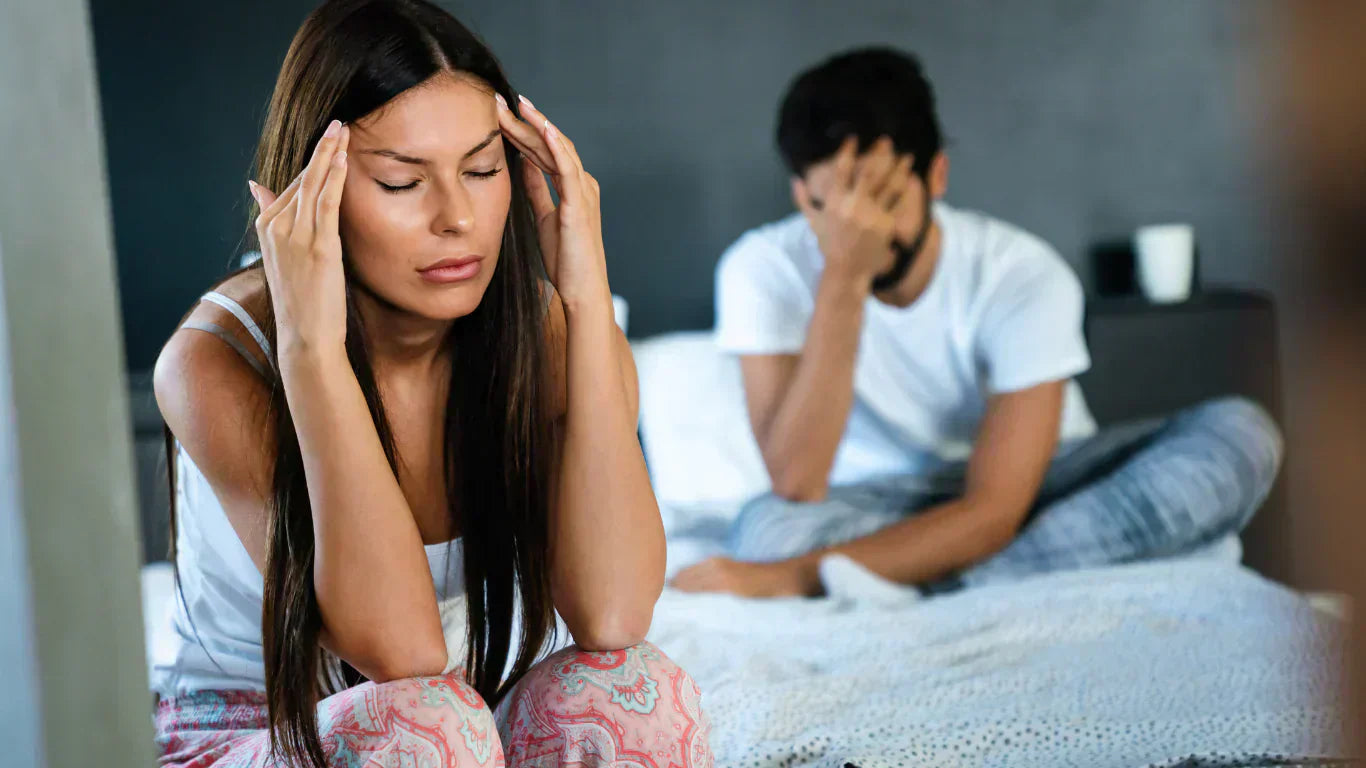
Performance anxiety in men is one of those things almost nobody talks about and almost everyone has felt. You are with someone, and instead of enjoying it, your mind starts checking: Will I get hard? Will I last? Is she or he enjoying this? That mental noise is exactly what makes your body respond worse. Here is how it works, how to tell it apart from a medical problem, and what you can do to enjoy sex again.
What Performance Anxiety in Men Is and Why It Feeds Itself
It is the fear of not measuring up sexually: not getting or keeping an erection, finishing too soon or taking too long, or not satisfying your partner. A 2020 review describes it as one of the most common sexual complaints, even though it has no diagnosis of its own (Pyke, 2020).
It works like a loop. Barlow proposed in 1986 that, when anxiety is present, attention shifts away from erotic sensations toward the threat ("what if it fails?"), and that distraction interferes with arousal. Masters and Johnson called it "spectatoring": you watch yourself from the outside, as if you were grading your own performance. If the erection fades, the fear is confirmed, and next time you arrive more tense.
Your body takes part too. The stress response works against the relaxation an erection needs, so nerves can shut it down even when your health is perfectly fine.
It is not a weakness, and it is not only for older men. In a study from one clinic in Milan, of 439 men seeking help for the first time for recent-onset erectile dysfunction, around 26% were 40 or younger (Capogrosso et al., 2013). That is data from a single clinic, but it makes clear that age does not protect you.
Anxiety or a Medical Cause? Clues to Tell Them Apart
Often it is a mix of both. These clues can point you in a direction, but they do not replace a medical check-up.
It points more toward anxiety if:
It happens in specific situations (a new partner, a lot of pressure) and not in others.
Your morning erections, or erections when you are alone, are still normal.
It started suddenly after a bad experience, and the worry shows up before sex.
See your doctor if:
Your erections have been getting weaker gradually and in every situation, including when you are alone.
You have diabetes, high blood pressure or high cholesterol, you smoke, or you have started a new medication, such as some antidepressants.
There is pain or any physical change that worries you.
The authors of the Milan study recommend a full medical evaluation for any man with erectile dysfunction, whatever his age. My advice: if you are unsure, start with your doctor. Ruling out a physical cause also takes away part of the fear.
How to Overcome Performance Anxiety in Men: 5 Steps
The evidence supports psychological work. A meta-analysis of 20 randomized trials found a moderate effect of psychological interventions on sexual symptoms (d = 0.58) and on satisfaction compared with a waitlist (Frühauf et al., 2013), although the evidence is stronger for women's sexual difficulties. There is a solid basis, but it pays to keep your expectations realistic.
Take away the grade. Sex is not an exam. Change the question "Am I performing?" to "What do I enjoy right now?" And remember that penetration is one part of sex, not all of it. Touching, kissing and oral sex count just as much.
Go back to sensations. Masters and Johnson's sensate focus means taking turns touching each other, with no goal of erection or orgasm and no penetration at first. Start with 15 minutes and notice temperature, pressure and texture. If an erection shows up, great. If it fades, nothing is lost.
Calm your body. Breathe slowly, making your exhale longer than your inhale, before and during sex. And watch out for alcohol as a crutch: it relaxes you at first, but it can make erections worse.
Say it out loud. One sentence is enough: "Sometimes I get stuck in my head and it shuts down, and it has nothing to do with you." Most partners feel relieved. Silence only feeds the fear.
Drop the escape habits. Avoiding sex, checking your erection every few seconds, rushing to penetration, or buying pills online without a prescription keep the problem going or add risks.
If it has not improved after a few weeks, or it is causing you a lot of distress, sex therapy or cognitive behavioral therapy is the way forward. For the ejaculation side of things, SVAKOM has a guide on why some men finish too fast.
Sex Toys and Performance Anxiety in Men: What They Can and Cannot Do
A toy will not cure anxiety. Used well, it lowers the pressure: alone, it lets you explore your arousal with nobody watching, and with a partner, it shares the focus. If you want the medical side, SVAKOM explains whether male sex toys can help with erectile dysfunction. My limit is this: do not use a toy as a test ("let me see if I can get hard with this"), because then it becomes one more exam.
Sam Neo 2 Pro is a masturbator with suction, vibration and a sleeve that heats to 38 °C, with 5 suction modes, 5 vibration modes, 5 combined modes and 1 heating mode. It works for practicing on your own without pressure. Limitations: the battery lasts about 60 minutes, it weighs 743 g, and the body is not submersible (the sleeve is).
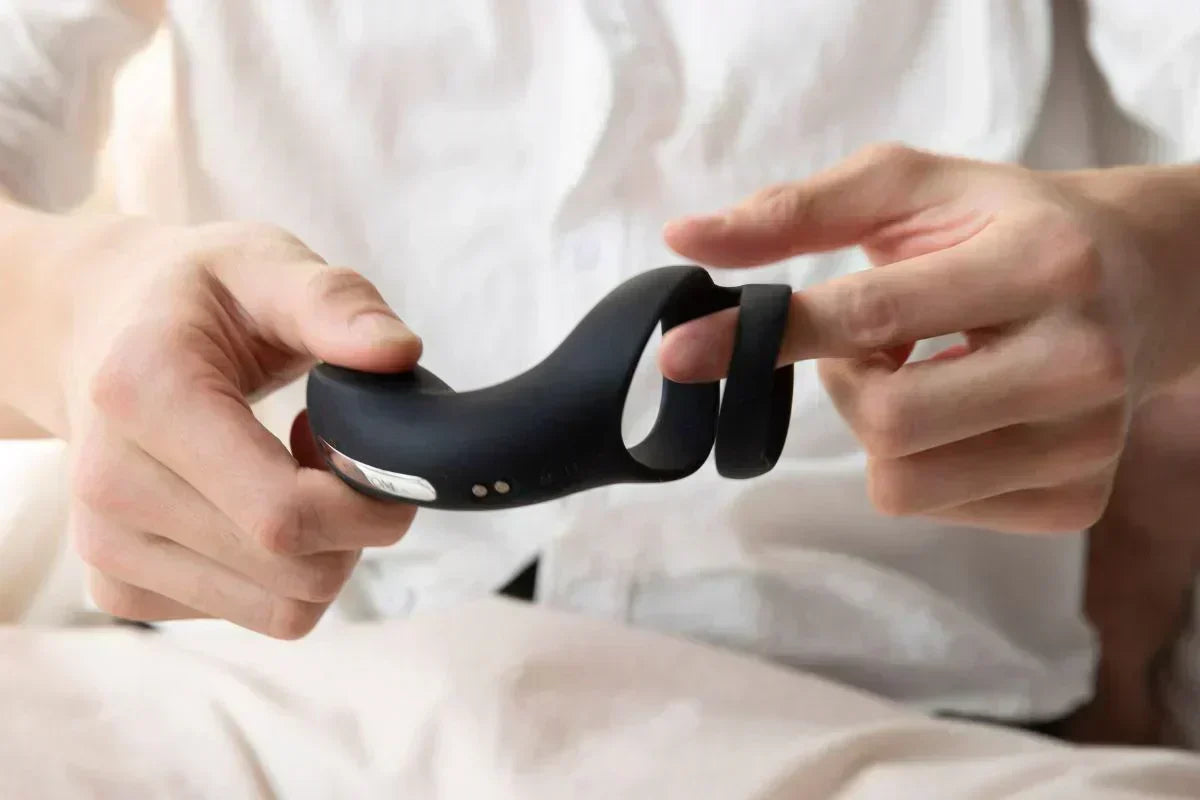
Benedict is a silicone double ring with perineum stimulation, 5 modes and 5 intensities, IPX7 water resistance and up to 4 hours of battery. Some men find it a support for feeling more secure about their erection, but it is not a treatment. Do not wear it for more than 20 or 30 minutes, and take it off if you feel pain or numbness.
Always check the cleaning instructions and compatible lubricants in each model's manual. If you want to bring one up with a partner, this guide on how to talk to your partner about sex toys can help you start the conversation.
Frequently Asked Questions
Is performance anxiety normal?
Yes, it is very common, and it does not mean something is wrong with you.
Does it go away on its own?
Sometimes, but if you avoid sex or keep monitoring yourself, it tends to stay. Working on it helps.
When should I ask for help?
If it lasts more than a few weeks, causes you a lot of distress, affects your relationship, or comes with the physical signs described above.
My Professional Opinion
What I see most in my practice is that the problem is not the erection, it is the monitoring. The goal is not to perform better, it is to stop performing. When you go back to sensations, conversation and curiosity, the body usually finds its rhythm again. And if it does not, that is not a failure. It is information that tells you to see a doctor or a sexologist.
Barlow DH. Causes of sexual dysfunction: the role of anxiety and cognitive interference. Journal of Consulting and Clinical Psychology, 1986;54(2):140-148. PubMed: 3700800
Capogrosso P, Colicchia M, Ventimiglia E, et al. One patient out of four with newly diagnosed erectile dysfunction is a young man: worrisome picture from the everyday clinical practice. Journal of Sexual Medicine, 2013;10(7):1833-1841. PubMed: 23651423
Frühauf S, Gerger H, Schmidt HM, Munder T, Barth J. Efficacy of psychological interventions for sexual dysfunction: a systematic review and meta-analysis. Archives of Sexual Behavior, 2013;42(6):915-933. DOI: 10.1007/s10508-012-0062-0
Masters WH, Johnson VE. Human Sexual Inadequacy. Little, Brown; 1970.
SVAKOM product pages for Sam Neo 2 Pro and Benedict (specifications), accessed November 2026.
ABOUT THE AUTHOR
Rafael Aragón
Psychologist · Sexologist
Desire & ArousalCouples TherapyIntimate Communication
Rafael Aragón is a psychologist and sexologist with an in-person practice in Almería and Málaga (Spain) and online consultations. For more than 10 years he has worked with individuals and couples facing difficulties with desire, arousal, orgasm and intimate communication, and he shares sexology from a clinical, approachable and taboo-free perspective.
Discover evidence-based fingering techniques for mind-blowing pleasure. Learn beginner-to-advanced methods for clitoral and G-spot stimulation, essential safety steps, common mistakes, and how the SVAKOM Echo 2 finger vibrator elevates manual play. Consent-first, people-focused advice for couples and solo explorers.
A decrease in sexual desire doesn’t mean something is wrong. Discover how stress, fatigue, and your nervous system influence libido—and how to reconnect gently, without pressure.
At a party recently, a man told me he spent over $100 on a sex toy to reignite his marriage — only for his wife to say she didn’t like it. The disappointment quickly turned into resentment.
That moment made it clear: the problem isn’t usually the toy. It’s the pressure we put on one product to fix everything, when most of us barely know our own desires.
Versatile pleasure products change everything. One toy, many sensations. If one doesn’t work, another might. No fear of choosing “wrong” — just joyful exploration.
From DuoGlow’s 5-in-one design to Beatrice’s full-body wand and Margot’s clever G-spot curve, versatility turns pleasure into discovery… and removes the pressure for good.
Anxiety doesn’t just affect the mind: it impacts the body and sexual desire, too. Discover how your nervous system influences pleasure, and how to reconnect with compassion and awareness.
Discover the art of dual pleasure with DuoGlow. Designed to stimulate internally and externally in perfect harmony, this refined dual vibrator invites you to explore layered sensation with balance, intention, and control.
Wondering what cock rings do? This guide explains how they work to enhance erections and pleasure, with benefits for solo or couples play. Includes types like vibrating rings and essential safety tips
Explore quiet, discreet vibrators designed for subtle public use. Learn safe scenarios, practical techniques, and responsible tips for comfortable, consensual play with SVAKOM's app-controlled wearable options
Nowadays, it’s rare to find couples who have never moved, or whose jobs don’t require travel or time abroad. It’s no secret that distant relationships can be stressful and emotionally challenging.
Leaking when you sneeze? Struggling to “find” your Kegels? You’re not alone. This guide breaks down what your pelvic floor really does, the mistakes most people make, and how to build strength gradually—with structured support that makes consistency easier.