Every relationship experiences ups and downs, and that includes intimacy.
Maybe work has been stressful. Maybe you've been focused on family responsibilities, health challenges, or simply trying to get through a busy season of life. Whatever the reason, it's not uncommon for couples to go through a dry spell—a period when physical intimacy becomes less frequent or disappears altogether.
If you're wondering how to rebuild intimacy after a dry spell, the good news is that many couples successfully reconnect. In fact, a dry spell doesn't necessarily mean there's something wrong with your relationship. Often, it's simply a sign that life has gotten in the way.
The key is approaching reconnection with patience, communication, and understanding.
What Is a Dry Spell?
A dry spell generally refers to a period of reduced sexual activity or physical intimacy in a relationship.
For some couples, that might mean a few weeks. For others, it could be several months.
There's no universal timeline.
What matters is whether you and your partner feel disconnected and want to rebuild that aspect of your relationship.
Why Do Dry Spells Happen?
Dry spells can happen for many reasons.
Common causes include:
Stress and burnout
Busy work schedules
Parenting responsibilities
Physical health issues
Hormonal changes
Mental health challenges
Relationship conflict
Long-distance circumstances
In many cases, neither partner intentionally withdraws. Life simply becomes busy, and intimacy gradually moves lower on the priority list.
Start With Communication
Before focusing on sex, focus on talking.
Many couples avoid discussing intimacy because they worry about creating tension or hurting each other's feelings. Unfortunately, avoiding the conversation often makes the disconnect feel even larger.
Instead, approach the topic with curiosity rather than blame.
Try saying:
"I've been missing our connection lately. How have you been feeling?"
This opens the door for an honest conversation without making either person feel attacked.
Rebuild Emotional Intimacy First
Physical intimacy often grows from emotional intimacy.
If you've been feeling distant, focus on reconnecting outside the bedroom first.
Simple ways to strengthen emotional connection include:
Going on regular date nights
Having meaningful conversations
Taking walks together
Sharing hobbies
Spending quality time without screens
The stronger your emotional connection becomes, the easier physical intimacy often feels.
Don't Put Pressure on Sex
One of the biggest mistakes couples make after a dry spell is treating sex as the ultimate goal.
Pressure can create anxiety, which makes intimacy even harder.
Instead of immediately focusing on intercourse, try rebuilding physical affection through:
Hugging
Kissing
Cuddling
Holding hands
Giving massages
These forms of touch help restore comfort and closeness without expectations.
Focus on Desire, Not Obligation
Intimacy works best when both partners feel genuinely interested and engaged.
If either partner feels pressured, sex can start to feel like a chore rather than a shared experience.
Ask yourselves:
What helps us feel connected?
What makes us feel desired?
What kinds of affection do we enjoy?
Exploring these questions can help couples better understand each other's needs.
Talk About What Has Changed
People change over time.
The things that excited you at the beginning of a relationship may not be the same things that excite you today.
A dry spell can be a valuable opportunity to discuss:
New interests
Changing preferences
Fantasies
Boundaries
Relationship goals
These conversations can strengthen intimacy by helping partners better understand each other.
In fact, many couples discover that they're dealing with differences in desire rather than a lack of attraction. If that sounds familiar, our guide on Why Is My Sex Drive Lower Than My Partner's? explores some of the most common reasons couples experience mismatched libidos.
Bring Back Playfulness
Routine can sometimes make intimacy feel predictable.
Adding a sense of novelty can help reignite excitement.
This doesn't require dramatic changes.
You could:
Plan a special date night
Try a new activity together
Change your environment
Explore new forms of foreplay
The goal isn't to force excitement but to create opportunities for discovery and connection.
For couples looking to reconnect physically after a dry spell, introducing a small, non-intimidating toy can be a great place to start. Tulip is a compact yet powerful bullet vibrator that delivers focused stimulation and can be easily incorporated into foreplay or partnered play without feeling overwhelming. Its discreet size makes it especially approachable for couples who are new to using toys together.
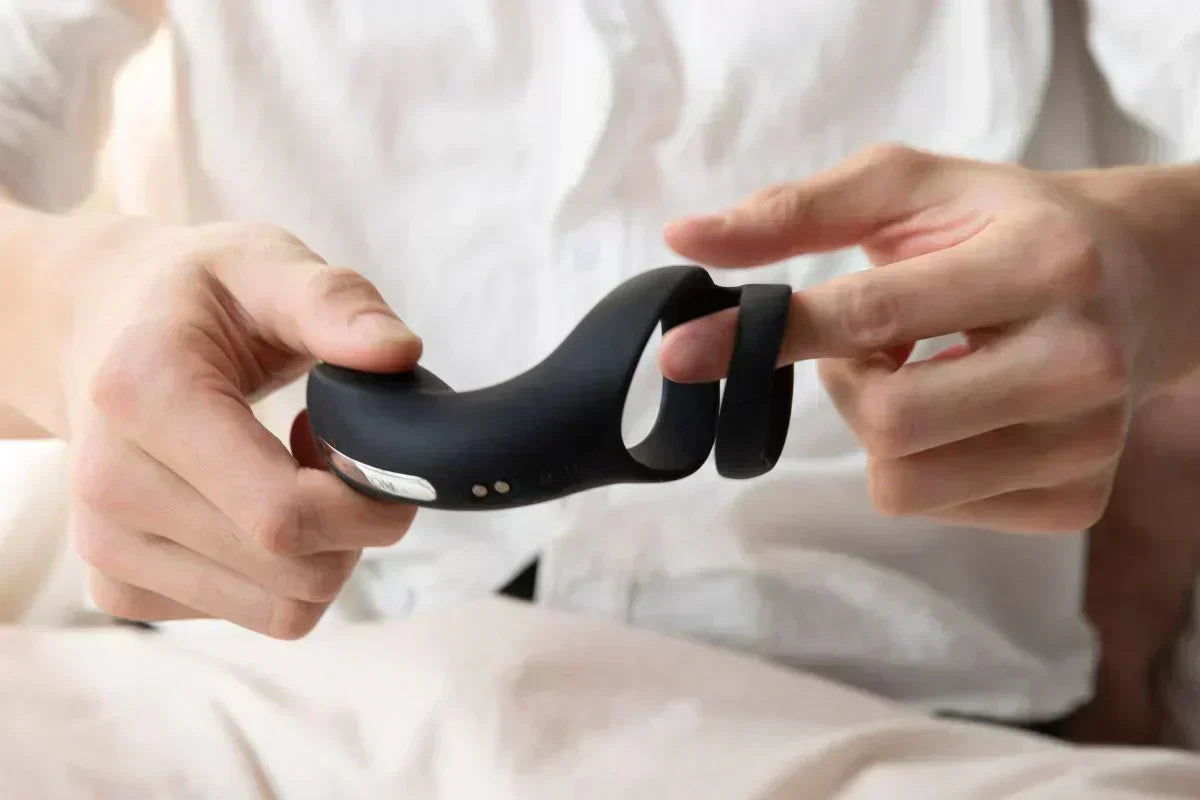
Another option is Tammy, which is designed to enhance partnered intimacy. Its textured stimulation can provide additional pleasure during penetration, helping couples explore new sensations together while maintaining the closeness and connection that make intimacy meaningful.
The goal isn't to replace intimacy—it's to create opportunities for curiosity, exploration, and connection.
Be Patient With the Process
Rebuilding intimacy rarely happens overnight.
If a dry spell developed over weeks or months, reconnecting may take time as well.
Celebrate small wins:
More conversations
More affection
More quality time
More comfort with physical touch
Progress is often gradual.
Patience allows intimacy to develop naturally rather than feeling forced.
When to Seek Additional Support
If intimacy issues are causing ongoing stress or conflict, speaking with a professional may help.
A therapist or sex therapist can help couples:
Improve communication
Address emotional barriers
Work through relationship challenges
Rebuild trust and connection
Seeking support is not a sign of failure. It's a sign that you're committed to strengthening your relationship.
The Bottom Line
Learning how to rebuild intimacy after a dry spell starts with understanding that intimacy is about much more than sex.
Communication, emotional connection, affection, and mutual understanding all play important roles in creating closeness.
By talking openly, spending intentional time together, rebuilding physical affection, and exploring new ways to connect, couples can often emerge from a dry spell feeling even closer than before.
Sometimes reconnecting isn't about getting back to where you were—it's about creating an even stronger connection moving forward.
What is considered a dry spell in a relationship?
A dry spell is a period when a couple experiences little or no sexual intimacy. There is no specific timeline that defines a dry spell—what matters is whether the lack of intimacy feels unusual or concerning for the people in the relationship.
Are dry spells normal in long-term relationships?
Yes. Most long-term couples experience periods where intimacy becomes less frequent due to stress, work, parenting responsibilities, health issues, life changes, or other external factors. A dry spell does not automatically mean the relationship is unhealthy.
How can couples rebuild intimacy after a dry spell?
Rebuilding intimacy often starts with open communication, emotional connection, and physical affection without pressure. Spending quality time together, discussing each other's needs, and gradually reintroducing touch can help couples reconnect both emotionally and physically.
Should we force ourselves to have sex after a dry spell?
No. Putting pressure on sex can create anxiety and make intimacy feel like an obligation. It's often more helpful to focus on rebuilding comfort, affection, and emotional closeness first, allowing desire to develop naturally over time.
Can sex toys help couples reconnect after a dry spell?
For some couples, introducing a toy can bring novelty and playfulness back into intimacy. Products like Tulip can add focused stimulation during foreplay, while Tammy can enhance partnered experiences with additional texture and sensation, helping couples explore pleasure together in a low-pressure way.
When should a couple seek professional help for intimacy issues?
If a dry spell is causing ongoing stress, conflict, or emotional distance, speaking with a therapist or sex therapist may be beneficial. Professional support can help couples improve communication, address underlying issues, and rebuild intimacy in a healthy way.
ABOUT THE AUTHOR
Ivy H.
Relationships & Sexual Wellness Writer
RelationshipsDatingSexual WellnessModern Intimacy
Ivy Huang is a relationship and sexual wellness writer specializing in modern dating, intimacy, and personal well-being. With years of experience creating educational content for global sexual wellness brands, she helps readers navigate relationships, communication, pleasure, and self-discovery with confidence and clarity.
Through her writing, Ivy explores topics ranging from dating trends and attachment styles to sexual health and emotional intimacy. She is passionate about making conversations around relationships and sexuality more approachable, inclusive, and evidence-based.
Her mission is to empower individuals to build healthier connections, embrace their authentic desires, and cultivate fulfilling relationships at every stage of life.
At a party recently, a man told me he spent over $100 on a sex toy to reignite his marriage — only for his wife to say she didn’t like it. The disappointment quickly turned into resentment.
That moment made it clear: the problem isn’t usually the toy. It’s the pressure we put on one product to fix everything, when most of us barely know our own desires.
Versatile pleasure products change everything. One toy, many sensations. If one doesn’t work, another might. No fear of choosing “wrong” — just joyful exploration.
From DuoGlow’s 5-in-one design to Beatrice’s full-body wand and Margot’s clever G-spot curve, versatility turns pleasure into discovery… and removes the pressure for good.
Anxiety doesn’t just affect the mind: it impacts the body and sexual desire, too. Discover how your nervous system influences pleasure, and how to reconnect with compassion and awareness.
Discover the art of dual pleasure with DuoGlow. Designed to stimulate internally and externally in perfect harmony, this refined dual vibrator invites you to explore layered sensation with balance, intention, and control.
Wondering what cock rings do? This guide explains how they work to enhance erections and pleasure, with benefits for solo or couples play. Includes types like vibrating rings and essential safety tips
Explore quiet, discreet vibrators designed for subtle public use. Learn safe scenarios, practical techniques, and responsible tips for comfortable, consensual play with SVAKOM's app-controlled wearable options
Nowadays, it’s rare to find couples who have never moved, or whose jobs don’t require travel or time abroad. It’s no secret that distant relationships can be stressful and emotionally challenging.
Leaking when you sneeze? Struggling to “find” your Kegels? You’re not alone. This guide breaks down what your pelvic floor really does, the mistakes most people make, and how to build strength gradually—with structured support that makes consistency easier.
Curious about anal masturbation but not sure where to start? This guide breaks down safety fundamentals, body-safe materials, lubrication basics, and how to choose the right toy—so you can explore confidently, comfortably, and at your own pace.
Solo play shouldn’t feel like managing tech settings. Discover how KooSync syncs your SVAKOM toy to video content in real time—creating a more immersive, responsive, and seamless experience from start to finish.