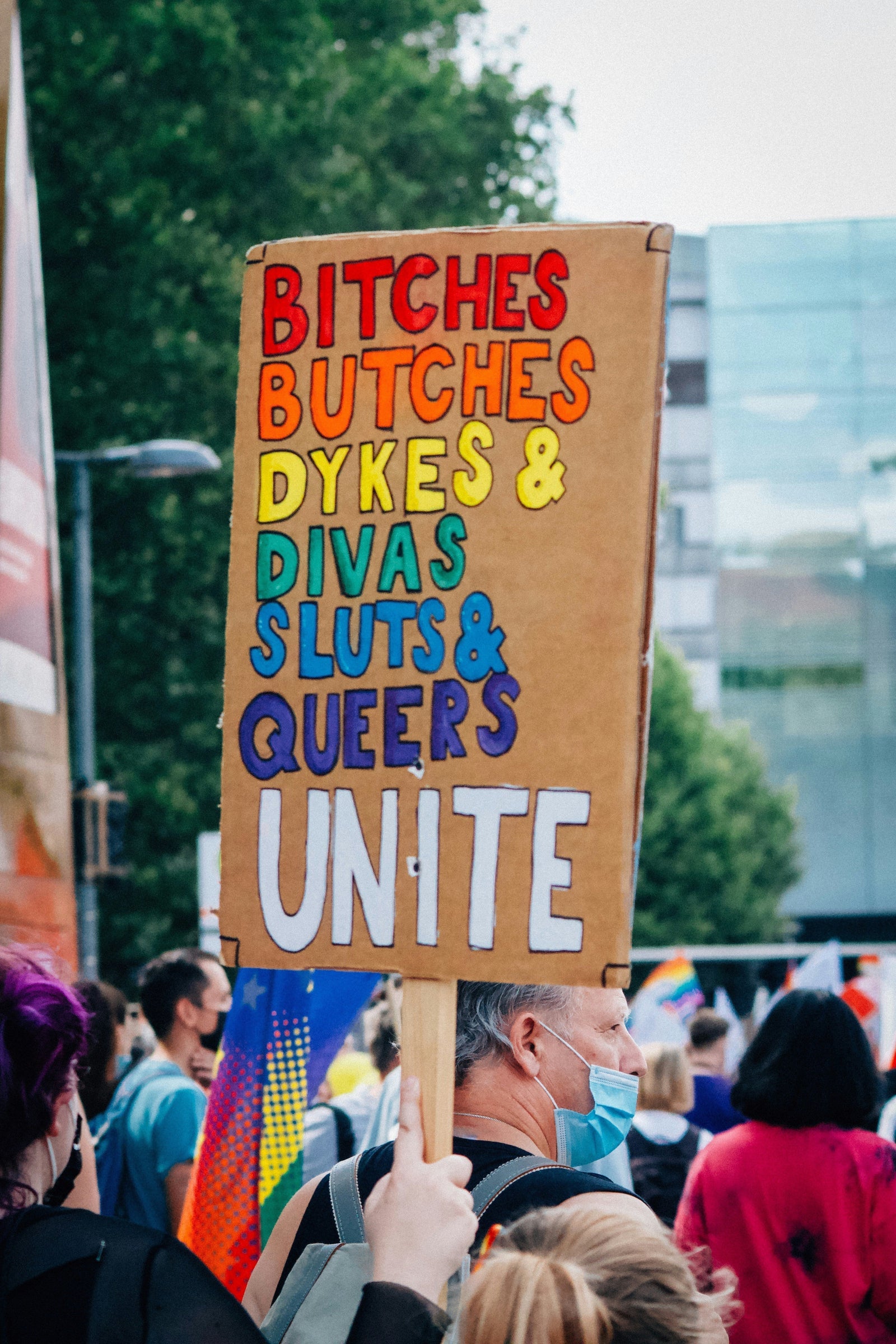
Bisexuality Awareness Day, also known as Celebrate Bisexuality Day or Bi Visibility Day, is celebrated every year on September 23. But how did this day come to be? Let’s take a quick trip back in time.
“The bisexual community has grown in strength, but in many ways we remain invisible.” – Gigi Raven Wilbur
In the 1990s, bisexual organizations began popping up across the United States, but bisexual people still felt like the “invisible letter” in the LGBTQ+ alphabet soup. Enter Wendy Curry, Michael Page, and Gigi Raven Wilbur—three passionate activists who decided enough was enough. At the 1999 International Lesbian, Gay, Bisexual, Trans, and Intersex Association (ILGA) Conference, they officially launched Bisexuality Awareness Day to shine a spotlight on the bisexual community.
Why September 23? Well, it’s the birthday of both Gigi Raven Wilbur and the legendary Freddie Mercury. If anyone could rock bisexual visibility, it was Freddie. The date is a nod to icons and activists alike.
Despite the progress since then, bisexual people still face “bi-erasure”-the tendency to overlook or invalidate bisexual identities, even within LGBTQ+ spaces. As Gigi Raven Wilbur once put it, “The bisexual community has grown in strength, but in many ways, we remain invisible.” That’s why Bisexuality Awareness Day is so important: it’s a chance to be seen, heard, and celebrated.
Did You Know?
About half of the LGBTQ+ community identifies as bisexual. That’s a lot of bi pride!
The bisexual pride flag was designed by Michael Page in 1998: just a year before Bisexuality Awareness Day was born.
Famous bisexual icons include Freddie Mercury, Lady Gaga, David Bowie, and Megan Fox. (Talk about a star-studded lineup!)
Busting Myths About Bisexuality
Let’s set the record straight (pun intended) on some common myths about bisexuality:
Myth 1: “It’s just a phase.”
Sure, some people may explore different labels before finding what fits, but bisexuality is a valid, lifelong orientation for many. It’s not a layover on the way to Gay Town or Straightville.
Myth 2: “Bisexual people are just confused or afraid to come out as gay or lesbian.”
Nope. Bisexuality means being attracted to more than one gender, and that’s not confusion—that’s just how some people are wired. Attraction can shift and change, but that doesn’t make it less real.
Myth 3: “You stop being bisexual if you date someone of the opposite gender.”
This one’s a classic. Bisexuality isn’t defined by your current relationship status. Whether you’re dating, single, or somewhere in between, your orientation is still valid.
Sadly, these myths can lead to bisexual people feeling invisible or pressured to “pick a side.” But the truth is, bisexuality is as real and resilient as any other identity.
Why Bisexuality Deserves Respect
Bisexuality isn’t a phase, a fad, or a halfway point. It’s a legitimate sexual orientation, and every bisexual person experiences it in their own unique way. Respecting bisexuality means busting stereotypes, challenging biphobia, and making room for bi voices in every conversation.
Visibility matters. When bisexual people are seen and celebrated, it encourages others to live authentically and helps create a world where everyone can love who they love—without fear or apology.
So, on Bisexuality Awareness Day (and every day), let’s show some love for the B in LGBTQ+. Because everyone deserves to be seen for who they are—no matter who makes their heart skip a beat.
How to Be a Brilliant Bi Ally
Want to support your bi friends, family, or colleagues? Here’s how to be a top-tier ally:
Don’t assume someone’s orientation based on their partner.
Challenge biphobic jokes or stereotypes when you hear them.
Celebrate Bi Visibility Day and share bi-positive content.
Listen to and uplift bisexual voices—everyone loves a little extra support!
Foreplay is often treated as a short warm-up, yet research shows many people want more time than they typically get. This guide covers practical methods — from kissing and whole-body touch to oral stimulation, grinding, and the thoughtful use of toys — and explains what actually helps arousal and connection.
If you've ever wondered what is sensory play for adults, you're not alone. More couples are exploring ways to make intimacy more engaging by focusing on the senses rather than just physical touch.
Many people can get aroused but still struggle to finish. Some always get close but can’t tip over. Others cum easily alone but not with a partner. Some climax, yet it feels weak. Different symptoms usually have different causes. This guide helps you identify your main pattern and gives practical, body-friendly ways to make orgasm more accessible and satisfying.
In missionary, the problem is that penetration is often the only thing happening. The classic in-and-out can be pleasurable, of course, but it might not be enough—at least not in the long run.
“Do women like anal sex?” is one of the most common questions people ask about intimacy. The real answer isn’t a simple yes or no — some women love it, some are curious, and many prefer not to. What makes the biggest difference isn’t the act itself, but preparation, communication, and whether both people feel free to stop at any time. Here’s an honest look at the range of experiences and what actually helps.
Not getting wet enough can feel frustrating, confusing, or even embarrassing — but it’s far more common than most people admit. Natural lubrication is closely tied to arousal, blood flow, hydration, and how much time your body is given to respond. This guide walks you through realistic, body-friendly ways to increase natural wetness, both on your own and with a partner.
Have you ever crossed your legs, squeezed your thighs, and suddenly felt a quiet wave of pleasure building? That sensation has a name: syntribation. It’s a simple, completely hands-free way of stimulating the clitoris through the natural pressure of your own body. No hands, no toys required — just curiosity and a bit of practice. Here’s what it actually is, how to try it, and why so many people find it surprisingly powerful.