When people think about intimacy in a relationship, they often focus on what happens between partners.
But what about the relationship you have with yourself?
Contrary to common misconceptions, self-pleasure isn't something that competes with a healthy relationship. In fact, many experts believe that understanding your own body and desires can actually strengthen intimacy with a partner.
Whether you're single, dating, or in a long-term relationship, self-pleasure can play an important role in sexual wellness, confidence, and communication.
Let's explore why self-pleasure may benefit both you and your relationship.
What Is Self-Pleasure?
Self-pleasure refers to exploring your own body for sexual enjoyment.
For many people, it's a normal part of learning about:
What feels good
What doesn't feel good
Personal preferences
Arousal patterns
Orgasm experiences
While self-pleasure is often viewed as a solo activity, the knowledge and confidence gained from it can carry over into partnered intimacy.
Self-Pleasure Helps You Understand Your Body
One of the biggest benefits of self-pleasure is self-awareness.
Your partner can't automatically know exactly what feels pleasurable to you.
The better you understand your own body, the easier it becomes to communicate your needs and preferences.
You may learn:
What type of touch you enjoy
Preferred levels of pressure
Areas of sensitivity
What helps you become aroused
What makes intimacy more enjoyable
This knowledge can lead to more satisfying experiences with a partner.
Better Communication Leads to Better Intimacy
Many couples struggle to talk openly about sex.
Sometimes this happens because people aren't entirely sure what they want themselves.
Self-exploration can help you become more confident discussing:
Desires
Boundaries
Preferences
Fantasies
New experiences
The more clearly you can communicate your needs, the easier it becomes for your partner to understand how to create pleasurable experiences together.
It Can Improve Sexual Confidence
Confidence plays a significant role in intimacy.
People who feel comfortable with their bodies and understand their own pleasure often experience less anxiety during sexual experiences.
Self-pleasure can help you:
Feel more connected to your body
Reduce performance pressure
Build sexual confidence
Feel more comfortable expressing desire
When you're less focused on insecurity, it becomes easier to be present and enjoy intimacy.
Self-Pleasure Can Reduce Pressure on Your Relationship
Many people assume their partner should be responsible for meeting all of their sexual needs.
In reality, that's a lot of pressure to place on one person.
A healthy relationship often includes both:
Shared intimacy
Personal sexual autonomy
Self-pleasure allows individuals to maintain a connection with their own sexuality while still enjoying a fulfilling relationship.
Rather than replacing partnered intimacy, it can complement it.
It Can Help Couples Navigate Different Sex Drives
One of the most common relationship challenges is mismatched libido.
It's normal for partners to have different levels of sexual desire.
When one partner wants sex more often than the other, self-pleasure can sometimes help reduce frustration without creating pressure or resentment.
This doesn't replace communication, but it can be one healthy way to navigate desire differences.
What felt exciting five years ago may not feel the same today.
Self-pleasure creates opportunities to continue learning about yourself throughout different stages of life and relationships.
This curiosity can benefit both partners by keeping conversations about intimacy open and evolving.
Exploring Pleasure With the Help of Toys
Many people incorporate sex toys into self-pleasure as a way to explore different sensations and better understand what they enjoy.
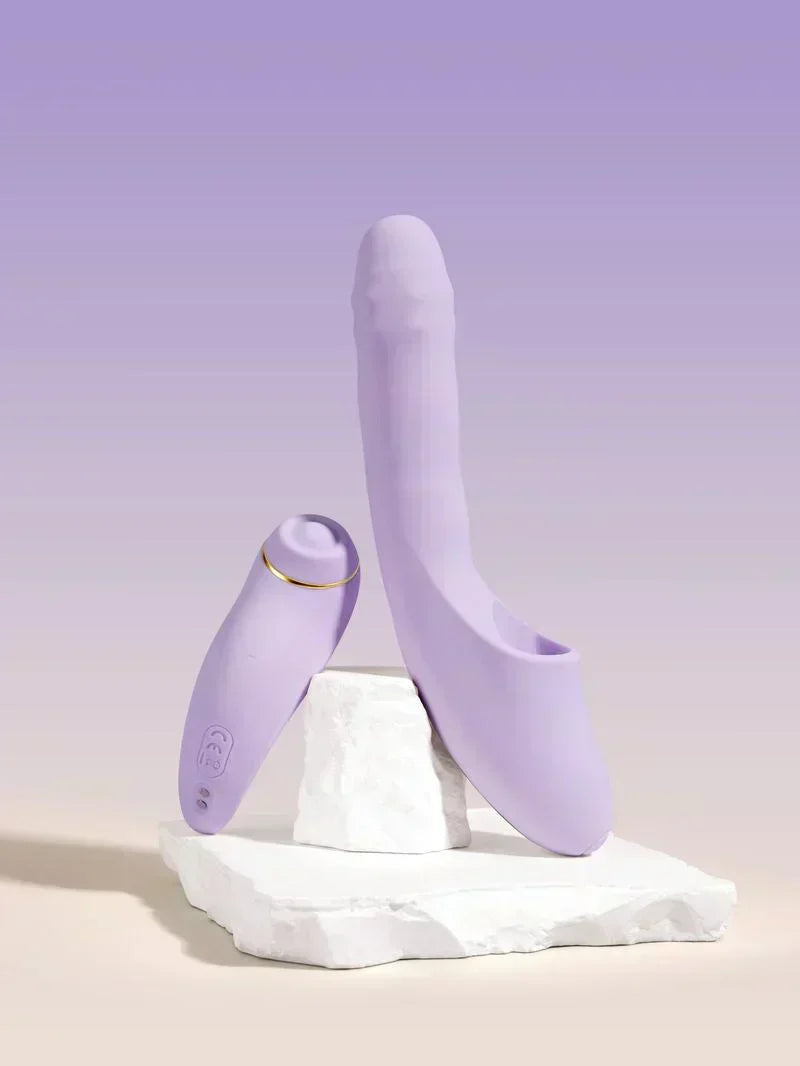
For women, Pulse Lite Neo offers focused stimulation in a compact design, making it a great option for discovering personal preferences and enhancing solo pleasure.
Those interested in exploring multiple forms of stimulation may also enjoy Duoglow, which combines internal and external stimulation to create a more immersive experience. Understanding what feels pleasurable during solo play can make it easier to communicate those preferences with a partner later on.
The goal isn't simply orgasm—it's learning more about your body and your relationship with pleasure.
Self-Pleasure Doesn't Mean Something Is Missing
One of the biggest myths about self-pleasure is that people only do it when they're dissatisfied with their relationship.
In reality, many people in happy, healthy relationships continue to engage in self-pleasure.
Just as spending time alone doesn't mean you dislike your partner, self-pleasure doesn't mean your relationship is lacking.
Both can exist together in a healthy way.
The Bottom Line
Self-pleasure is more than a solo activity—it's an opportunity for self-discovery, confidence, and personal growth.
By helping you better understand your body, communicate your needs, and maintain a healthy connection with your own sexuality, self-pleasure can contribute to stronger intimacy and healthier relationships.
Rather than viewing self-pleasure and partnered intimacy as opposites, many couples find that they work together. The more you understand your own pleasure, the easier it becomes to share that knowledge, confidence, and connection with someone else.
Can self-pleasure improve your relationship?
Yes. Self-pleasure can help you understand your preferences, communicate your needs more clearly, and feel more comfortable discussing intimacy with your partner. When approached openly and without judgment, it can complement partnered intimacy rather than compete with it.
Is masturbation normal when you're in a relationship?
Yes. Masturbation is a normal form of sexual expression, including for people in committed relationships. Partners can have different desires and levels of sexual interest, and solo pleasure can be one way to explore personal needs while respecting each other's boundaries.
Can masturbation help you understand what you like sexually?
Yes. Exploring your body on your own can help you learn which types of touch, pressure, rhythm, and stimulation you enjoy. Understanding your preferences can make it easier to communicate what feels good with a partner and create a more satisfying intimate experience together.
Does masturbation affect intimacy with your partner?
Not necessarily. Self-pleasure and partnered intimacy can coexist in a healthy relationship. For some couples, solo exploration supports self-awareness and reduces pressure around sex. Honest communication is important if either partner feels neglected, insecure, or unsure about how masturbation fits into the relationship.
Should couples talk about masturbation?
Open conversations about masturbation can help partners better understand each other's desires, boundaries, and attitudes toward pleasure. Choose a comfortable moment to talk without judgment or pressure. The goal is not to justify personal habits but to build trust and understand each other's perspectives.
Can using sex toys help improve a couple's sex life?
Sex toys can introduce new sensations and encourage couples to explore their preferences together. They can be used during solo pleasure or partnered intimacy, depending on individual comfort and interest. Discussing what you'd like to try and respecting each other's boundaries can help make the experience enjoyable for both partners.
Is it normal for partners to have different sex drives?
Yes. It's common for partners to have different levels of sexual desire, and those differences can change over time. Rather than treating mismatched libidos as a personal rejection, try discussing your needs openly and finding ways to maintain closeness that feel comfortable for both of you. Self-pleasure may also help each partner navigate their individual needs without placing pressure on the other.
How can you introduce self-pleasure into a conversation with your partner?
Start with curiosity and reassurance rather than criticism. You might talk about what you've learned about your preferences, ask how your partner feels about solo pleasure, or discuss whether you'd like to explore new experiences together. Listening without judgment can help create a safe space for honest conversations about intimacy.
ABOUT THE AUTHOR
Ivy H.
Relationships & Sexual Wellness Writer
RelationshipsDatingSexual WellnessModern Intimacy
Ivy Huang is a relationship and sexual wellness writer specializing in modern dating, intimacy, and personal well-being. With years of experience creating educational content for global sexual wellness brands, she helps readers navigate relationships, communication, pleasure, and self-discovery with confidence and clarity.
Through her writing, Ivy explores topics ranging from dating trends and attachment styles to sexual health and emotional intimacy. She is passionate about making conversations around relationships and sexuality more approachable, inclusive, and evidence-based.
Her mission is to empower individuals to build healthier connections, embrace their authentic desires, and cultivate fulfilling relationships at every stage of life.
In a recent article, we’ve explored what squirting is, what it isn’t, and how many myths still circulate around the topic. Good news? Squirting isn’t a goal to achieve, but an experience that can result from the simple pursuit of pleasure. Bad news? If you’re pressuring yourself into experiencing it, chances are it’s going to be elusive.
Curious about what lube is used for? This guide explains the benefits of personal lubricant for sexual comfort, toy play, and intimacy. Learn why water-based lube is the safest choice for most people and silicone toys
Whether you’re looking for answers for yourself or for your partner, let’s start with one clear point: difficulty reaching orgasm is common, and in most cases, it’s not a sign that something is wrong.
Choosing your first sex toy doesn’t have to feel overwhelming. Discover how to explore safely, confidently, and at your own pace—with guidance designed to support, not pressure.
Discover evidence-based fingering techniques for mind-blowing pleasure. Learn beginner-to-advanced methods for clitoral and G-spot stimulation, essential safety steps, common mistakes, and how the SVAKOM Echo 2 finger vibrator elevates manual play. Consent-first, people-focused advice for couples and solo explorers.
A decrease in sexual desire doesn’t mean something is wrong. Discover how stress, fatigue, and your nervous system influence libido—and how to reconnect gently, without pressure.
At a party recently, a man told me he spent over $100 on a sex toy to reignite his marriage — only for his wife to say she didn’t like it. The disappointment quickly turned into resentment.
That moment made it clear: the problem isn’t usually the toy. It’s the pressure we put on one product to fix everything, when most of us barely know our own desires.
Versatile pleasure products change everything. One toy, many sensations. If one doesn’t work, another might. No fear of choosing “wrong” — just joyful exploration.
From DuoGlow’s 5-in-one design to Beatrice’s full-body wand and Margot’s clever G-spot curve, versatility turns pleasure into discovery… and removes the pressure for good.
Anxiety doesn’t just affect the mind: it impacts the body and sexual desire, too. Discover how your nervous system influences pleasure, and how to reconnect with compassion and awareness.
Discover the art of dual pleasure with DuoGlow. Designed to stimulate internally and externally in perfect harmony, this refined dual vibrator invites you to explore layered sensation with balance, intention, and control.