Can Everyone Squirt? Let’s Talk About What’s Real (and What’s Pressure)
by Giulia M.
In a recent article, we’ve explored what squirting is, what it isn’t, and how many myths still circulate around the topic. Good news? Squirting isn’t a goal to achieve, but an experience that can result from the simple pursuit of pleasure. Bad news? If you’re pressuring yourself into experiencing it, chances are it’s going to be elusive.
Squirting Isn’t Universal… And It Doesn’t Have to Be
There are so many factors involved when it comes to being able to squirt: emotional, physical, relational, environmental… Today, we’re going to focus on the physical ones.
Why Bodies Respond Differently to Stimulation
Bodies are not identical machines. They are responsive systems shaped in unique ways. Some people squirt easily, while others never do. So what makes the difference?
Anatomical Differences
The position of the urethra, the sensitivity of the anterior vaginal wall (often associated with the G-spot area), the size and responsiveness of Skene’s glands, and even bladder capacity differ from person to person.
For some bodies, internal pressure builds quickly and intensely. For others, pleasure is more clitoral-dominant or diffuse. This simply means stimulation is processed differently.
Pelvic Floor Tone
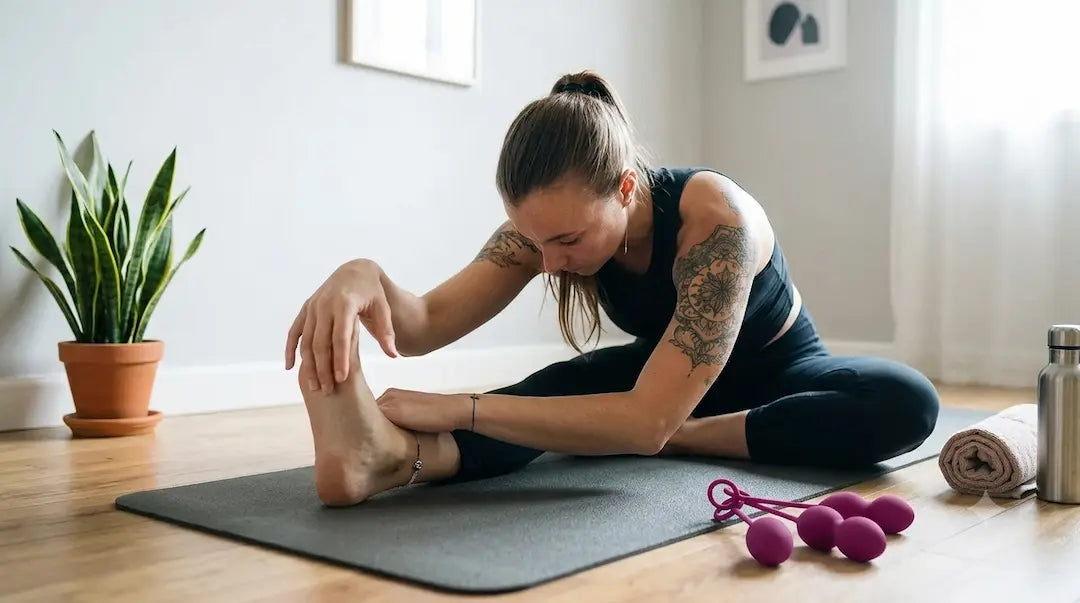
The pelvic floor muscles surround the urethra and vaginal canal. If these muscles are chronically tight, they may resist release. If they are very weak, control may feel inconsistent.
Stress, trauma, posture habits, or even high-intensity training can create unconscious clenching. This is something you can work on. But it can influence your ability to squirt.
Arousal Patterns
Squirting often happens during progressive internal stimulation combined with high arousal. If stimulation is interrupted, too intense too early, or inconsistent, the body may never reach the threshold required for fluid release.
Hormonal Fluctuations
Estrogen supports vaginal elasticity and responsiveness. Lower estrogen states (such as postpartum, perimenopause, or certain contraceptive use) can alter your sensations. Stress hormones like cortisol can also interfere with arousal by keeping the nervous system in a high-alert state.
The Internet Says “Make Her Squirt.” Here’s What It Leaves Out.
Here’s why the “how can I squirt” question can lead to nothing but dead ends. The better question is: how can I relax enough to let my body respond? Unless you change your mindset about it, you will not see much improvement.
From Forcing It to Feeling It: A Better Approach
In truth, the easiest way to squirt is not to try squirting at all. We know, it sounds silly! But let us tell you why.
●To squirt, you need to feel relaxed. Your stress levels should be low. Your guard down. When your body is in fight-or-flight mode, release responses are inhibited. Pressuring yourself into achieving a goal in the bedroom is never the key to feeling completely safe and comfortable.
●Communication with your partner is key. You need to tell him what you like, the way you like it, the rhythm you need, and the kind of pressure. It’s things like this that add up to boost arousal and ready the body for more.
●On a technical note: the urge-to-pee sensation is completely normal! Make sure to empty your bladder beforehand, and then forget about any expectations. Do not tense, do not freeze. Tensing is the natural reflex, but that’s exactly what blocks release. When squirting happens, the feeling is similar to the one of peeing. However, the liquid that comes out is different from urine. It can be clearer and vary in volume from person to person.
If You Want to Explore the G-Spot, Start Here
Although squirting should happen naturally rather than be chased, there are strategies that can help you get to know your body better, and explore sensations in a constructive way. The G-spot is definitely something to involve in your exploration–whether it’s on your own, or with a partner.
The Advantage of Curved Design and Steady Pressure
When it comes to orgasm, there is no shadow of a doubt: curved toys, designed for G-spot stimulation, are your best buddies. Not because they “cause” squirting, but because they offer consistent, targeted stimulation.
For most women, when rhythmic pressure is applied to the anterior vaginal wall, arousal builds up most easily. Of course, each one has its own time. And we all may like slightly different pacing and types of stimulation. However, curved sex toys are specifically designed to hit this spot. Combine this with vibrations, or thrusting options–and you have all you need to take your pleasure to a whole new level.
Dual stimulation models are also a great option if you want a next-level kind of feeling. They are amazing for solo play, so they can help you get ready for squirting on your own. Some, like Mora Neo, come with thrusting beads, mimicking sensations of sex with a partner. Others, like Erica, are specifically designed for G-spot and clitoral stimulations together.
Squirting has been turned into a milestone, a headline, proof of “doing it right.” But your body is not a performance stage, and intimacy is not a scoreboard.
If it happens, it happens. If it doesn’t, nothing is missing. The most satisfying experiences rarely come from chasing an outcome. They come from paying attention, adjusting, breathing, staying curious, and allowing your body to respond in its own way.
No two women are the same. We all have different tastes, sensitivity levels, fantasies, and even body shapes. Therefore, the key word in sex is always going to be: curiosity.
If you don’t know what “yoni” means, think again. In Sanskrit, “yoni” is often used to refer to the womb, vulva, vagina, or female genital area more broadly.
Most people know the feeling of being “horny,” but many also know what it’s like when that desire just doesn’t show up. Sexual arousal isn’t always automatic—it can be influenced by stress, fatigue, hormones, mood, or simply being out of practice. The good news? There are many practical, low-pressure ways to get yourself into the mood. This guide walks you through what arousal really is, why it can feel hard sometimes, and proven techniques to help you feel horny more easily—whether you’re solo or with a partner.
Wondering if you should be doing pelvic floor exercises? Learn the key signs of a weak pelvic floor, who benefits most from Kegels, when Kegels can do more harm than good, and how to start safely.
Morning sex has real, science-backed benefits — from a mood boost to deeper connection. Learn why libido peaks in the morning, the best low-effort positions, and simple tips to make it effortless.
We know: it seems like 90% of the work you have to do to get her in the mood is down there. Spoiler alert: it’s not. Erogenous zones aren’t just in the genital area...
Not sure whether to use the SVAKOM App or KooSync? Learn the key differences between the two platforms, discover which features each offers, and find out which app is right for your compatible SVAKOM toy.