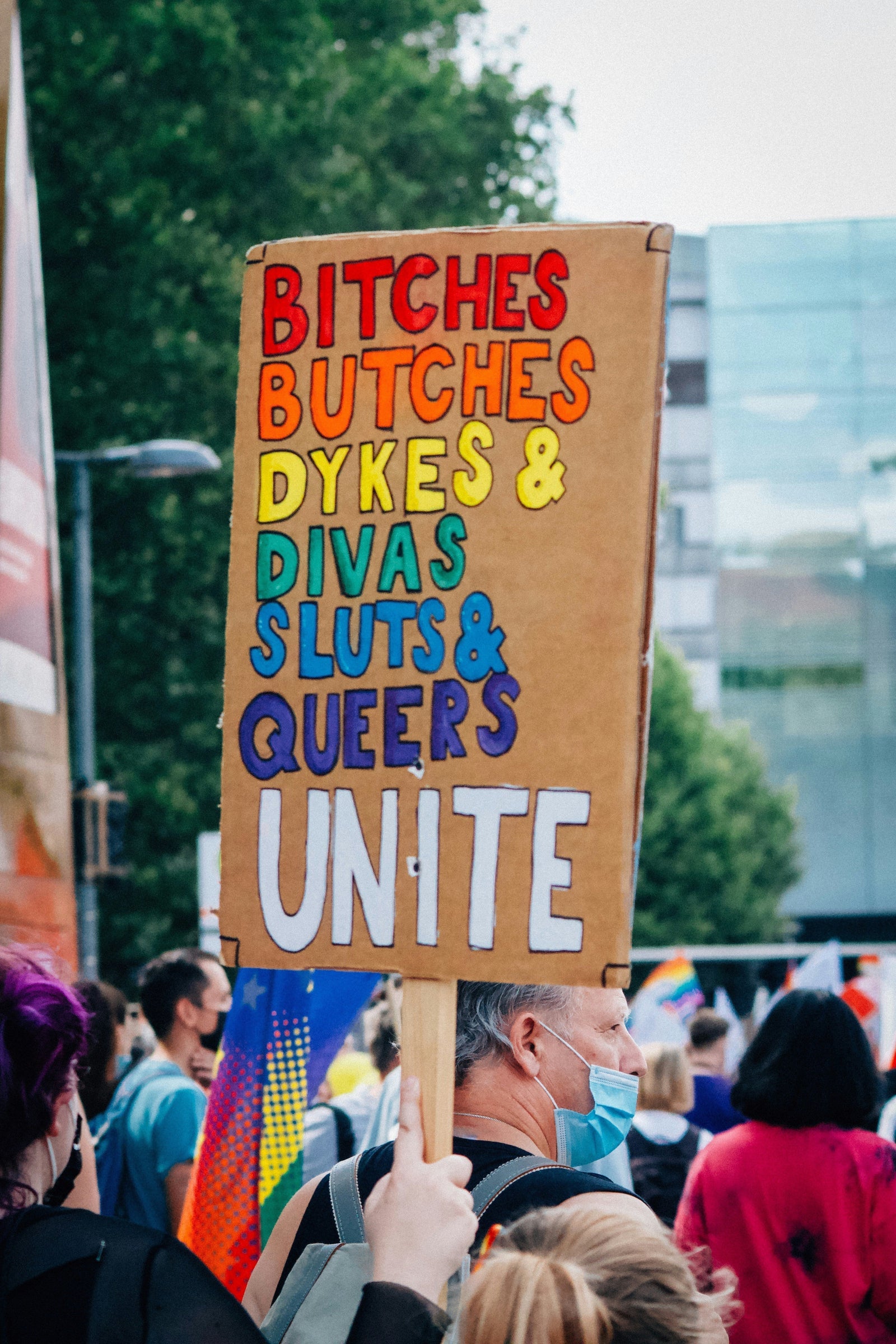
Bisexuality Awareness Day, also known as Celebrate Bisexuality Day or Bi Visibility Day, is celebrated every year on September 23. But how did this day come to be? Let’s take a quick trip back in time.
“The bisexual community has grown in strength, but in many ways we remain invisible.” – Gigi Raven Wilbur
In the 1990s, bisexual organizations began popping up across the United States, but bisexual people still felt like the “invisible letter” in the LGBTQ+ alphabet soup. Enter Wendy Curry, Michael Page, and Gigi Raven Wilbur—three passionate activists who decided enough was enough. At the 1999 International Lesbian, Gay, Bisexual, Trans, and Intersex Association (ILGA) Conference, they officially launched Bisexuality Awareness Day to shine a spotlight on the bisexual community.
Why September 23? Well, it’s the birthday of both Gigi Raven Wilbur and the legendary Freddie Mercury. If anyone could rock bisexual visibility, it was Freddie. The date is a nod to icons and activists alike.
Despite the progress since then, bisexual people still face “bi-erasure”-the tendency to overlook or invalidate bisexual identities, even within LGBTQ+ spaces. As Gigi Raven Wilbur once put it, “The bisexual community has grown in strength, but in many ways, we remain invisible.” That’s why Bisexuality Awareness Day is so important: it’s a chance to be seen, heard, and celebrated.
Did You Know?
About half of the LGBTQ+ community identifies as bisexual. That’s a lot of bi pride!
The bisexual pride flag was designed by Michael Page in 1998: just a year before Bisexuality Awareness Day was born.
Famous bisexual icons include Freddie Mercury, Lady Gaga, David Bowie, and Megan Fox. (Talk about a star-studded lineup!)
Busting Myths About Bisexuality
Let’s set the record straight (pun intended) on some common myths about bisexuality:
Myth 1: “It’s just a phase.”
Sure, some people may explore different labels before finding what fits, but bisexuality is a valid, lifelong orientation for many. It’s not a layover on the way to Gay Town or Straightville.
Myth 2: “Bisexual people are just confused or afraid to come out as gay or lesbian.”
Nope. Bisexuality means being attracted to more than one gender, and that’s not confusion—that’s just how some people are wired. Attraction can shift and change, but that doesn’t make it less real.
Myth 3: “You stop being bisexual if you date someone of the opposite gender.”
This one’s a classic. Bisexuality isn’t defined by your current relationship status. Whether you’re dating, single, or somewhere in between, your orientation is still valid.
Sadly, these myths can lead to bisexual people feeling invisible or pressured to “pick a side.” But the truth is, bisexuality is as real and resilient as any other identity.
Why Bisexuality Deserves Respect
Bisexuality isn’t a phase, a fad, or a halfway point. It’s a legitimate sexual orientation, and every bisexual person experiences it in their own unique way. Respecting bisexuality means busting stereotypes, challenging biphobia, and making room for bi voices in every conversation.
Visibility matters. When bisexual people are seen and celebrated, it encourages others to live authentically and helps create a world where everyone can love who they love—without fear or apology.
So, on Bisexuality Awareness Day (and every day), let’s show some love for the B in LGBTQ+. Because everyone deserves to be seen for who they are—no matter who makes their heart skip a beat.
How to Be a Brilliant Bi Ally
Want to support your bi friends, family, or colleagues? Here’s how to be a top-tier ally:
Don’t assume someone’s orientation based on their partner.
Challenge biphobic jokes or stereotypes when you hear them.
Celebrate Bi Visibility Day and share bi-positive content.
Listen to and uplift bisexual voices—everyone loves a little extra support!
You have gotten out of a long-term relationship. We know, it sucks. You are wondering how long it will be before you find someone else who's really worth it.
Self-pleasure is so often reduced to an outcome — a technique, an orgasm, a box to check. But it can be something far more meaningful: a homecoming to your own body and sensations. In this personal and insightful piece, Sexological Bodyworker Johanna Debes explores why so many women lose touch with their desire, how self-pleasure rebuilds body knowledge and confidence, and why approaching it with curiosity instead of pressure changes everything.
Have you ever found yourself checking your phone repeatedly after sending a message?
Or felt your mood change completely because someone you’re dating took longer than usual to reply?
Going from friends with benefits to a committed relationship isn't usually something you actively seek—or plan for. But it can happen. Not always, and not always in a simple way.
No two women are the same. We all have different tastes, sensitivity levels, fantasies, and even body shapes. Therefore, the key word in sex is always going to be: curiosity.
If you don’t know what “yoni” means, think again. In Sanskrit, “yoni” is often used to refer to the womb, vulva, vagina, or female genital area more broadly.
Most people know the feeling of being “horny,” but many also know what it’s like when that desire just doesn’t show up. Sexual arousal isn’t always automatic—it can be influenced by stress, fatigue, hormones, mood, or simply being out of practice. The good news? There are many practical, low-pressure ways to get yourself into the mood. This guide walks you through what arousal really is, why it can feel hard sometimes, and proven techniques to help you feel horny more easily—whether you’re solo or with a partner.
Wondering if you should be doing pelvic floor exercises? Learn the key signs of a weak pelvic floor, who benefits most from Kegels, when Kegels can do more harm than good, and how to start safely.