Why Chasing an Orgasm Can Make It Harder to Have One
by Paula Lucas
Maybe the first question we should ask ourselves is: what does having an orgasm mean to me?
If we close our eyes and picture a woman having an orgasm, we probably have a pretty clear image in mind: intense movements, moaning, penetration, a gradual build-up and an unmistakable climax. We have learned to recognize what an orgasm is supposed to look like. But... does it always look (or feel) like that?
I hear the same things over and over again in my daily practice: “I feel broken because I’m 35 and I’ve never had an orgasm,” “I’ve never felt that ‘explosion’ my friends talk about,” or even, “I fake orgasms because I feel bad for my partner.”
And honestly, if so many of us share the same concerns, maybe we should start questioning whether this image of the female orgasm (a very porn-inspired one, by the way) is that accurate.
Orgasm has become a central goal in many sexual encounters. Sometimes to the point where, if nobody comes, it can feel as though the sex was somehow incomplete. But when orgasm becomes something we must achieve, frustration, anxiety and the feeling that our body is not working the way it should can quickly follow.
And here lies an interesting paradox: the more attention we pay to whether we are getting there, the harder it can become to stay connected to what we are feeling.
Objectification Theory: When We Experience Sex in the Third Person
Fredrickson and Roberts (1997) proposed Objectification Theory to explain how women can internalize the external gaze that our culture has historically placed on our bodies.
When we start perceiving ourselves in the third person, we move away from experiencing ourselves as sensual beings and start seeing ourselves as objects of desire. And, well, objects don’t feel pleasure. This is not only about body confidence. It is also about where our attention goes during sex.
Dove and Wiederman (2000) found that more cognitive distraction during sexual activity was associated with lower sexual satisfaction, less consistent orgasms and more orgasm faking. This does not mean that glancing at your stomach for a second will stop you from having an orgasm. It means that pleasure requires at least some of our attention to remain connected to our sensations.
Are We Broken?
Mainstream pornography has helped popularize a very specific sexual script: penetration takes center stage, while other practices, particularly clitoral stimulation, are often pushed into the background. And female orgasm is frequently portrayed as an almost automatic consequence of penetration.
The problem is that this script does not reflect how many women reach orgasm.
In a probability sample of 1,055 women, only 18.4% reported that vaginal intercourse without additional clitoral stimulation was sufficient for orgasm. Another 36.6% said they needed clitoral stimulation during intercourse to reach orgasm, while a further 36% reported that clitoral stimulation made their orgasms feel better (Herbenick et al., 2018).
So yes, it is perfectly normal to reach orgasm easily on your own and find it more difficult with a partner if the person in front of you (or on top of you) hasn’t quite put in the work to learn what you enjoy.
We can therefore end up internalizing a rather contradictory sexual script: the practice we have culturally learned to consider the center of sex is not necessarily the one that provides the stimulation many women need to orgasm.
This may also help us understand why faking orgasm is part of some women’s sexual experiences. If we have learned that, after a certain amount of penetration, we are supposed to come, we may start feeling pressure to perform a response that our body simply is not experiencing.
None of this means that penetration cannot be incredibly pleasurable, or that women cannot orgasm through penetration. It means that we have culturally made penetration the main character in a much more diverse story of female sexuality.
And when we follow that script automatically, we can end up paying more attention to having the kind of sex we think we are supposed to be having than to noticing what is turning us on.
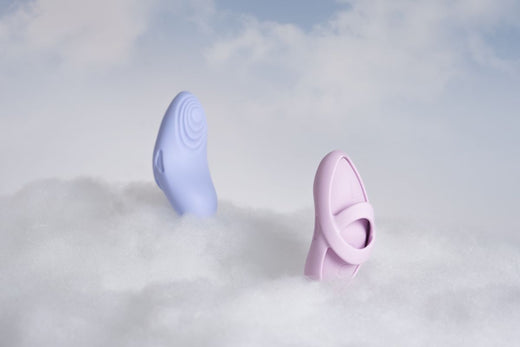
This is where exploring other forms of pleasure becomes interesting. Clitoral stimulation, whether with our hands, with a partner, or with a toy such as Klitty, can help us take penetration out of the center for a moment and bring our attention back to our own sensations: experimenting with different intensities, rhythms and areas, stopping, changing things up, and discovering what actually feels good without having to recreate a sexual scene we have learned somewhere else.
It is not about giving up penetration. It is about letting penetration stop being the script and become an option again.
Not All Orgasms Feel the Same
An orgasm is not always the intense explosion we are used to seeing on screen. It can feel explosive, come in several successive waves, or feel more sustained and prolonged. Its intensity, duration and sensations can vary greatly between people and even from one experience to another in the same woman. These are not rigid categories, but simply a way of understanding that there is no single “right” way to experience an orgasm.
Conclusions
Maybe the problem is not that we don’t know how to have orgasms. Maybe, for a very long time, we have been taught what our orgasms are supposed to look like.
We have grown up with sexual scripts in which penetration takes centre stage, orgasm is treated as the final goal, and female pleasure is represented in a very specific way. When our own experience does not match that model, it is easy to assume that something is wrong, when female sexual response is actually far more diverse.
Reconnecting with pleasure means gradually shifting our attention from “What should I be feeling?” to “What am I actually feeling?” Giving ourselves time, exploring different kinds of stimulation, and discovering which rhythms, intensities and sensations we enjoy can help us understand our own sexual response better.
Sex toys can also be part of that exploration. Klitty can be used to experiment with different sensations, either alone or with a partner, without turning orgasm into the only goal. The point is not to replace one sexual script with another, or to find a new “correct” way to come. It is to give ourselves more room to explore what pleasure actually feels like for us.
Because exploring our pleasure should not mean finding another formula telling us how we are supposed to enjoy sex. It should give us more freedom to discover it for ourselves: less focused on recreating the sex we have been taught to have, and more connected to the sex we enjoy.
I’m Paula Lucas, a clinical psychologist, sexologist, and couples therapist based in Barcelona, where I work in clinical practice and have over four years of experience. I have also delivered sexuality workshops across Catalonia, as well as workshops on self-esteem and well-being for brands such as ISDIN. Through my project, Terra Psiquis (@terra_psiquis), I create evidence-based content about psychology, relationships, sexuality, and sexual well-being, with the aim of making these topics more accessible and easier to talk about.
SVAKOM brought innovation, connection, and a touch of lilac to EroSpain 2025. From award wins and app demos to one unforgettable party, here's everything that made this year's show in Barcelona one to remember.
Celebrate love and pleasure this Valentine’s Day with luxurious sex toys—perfect for him, her, them, or yourself. Find the ideal gift for deeper intimacy and self-care.
"물속에서 섹스 장난감을 즐기는 날이 있다면, 12월 5일로 정하세요. 그날은 욕조 파티의 날입니다!"
미국의 공식 행사로, 전 세계의 성인들이 성적 쾌락을 추구하는 데 있어 좋은 기회를 제공합니다. 욕조가 없더라도 이 기회를 활용하여 성인 전용 샤워 타임 액션을 영감을 줄 수 있습니다.
그래서, 수중 모험을 위해 어떤 섹스 장난감을 선택해야 할까요?