
Can a Vibrator Improve Your Sex Life? A Sexologist’s Perspective

Have you ever wondered whether using a vibrator means something is missing in your relationship?
It's one of the questions I hear most often in my practice as a sexologist and couples therapist. Many people feel embarrassed even asking it. Others worry that introducing a pleasure device into their intimate life somehow means they have failed as a partner or that their partner has failed them.
The truth is far less dramatic.
In my experience, pleasure devices are rarely the root cause of relationship problems. What I see far more often is a lack of communication, unrealistic expectations, performance anxiety, or people who have never been given the opportunity to truly understand their own bodies.
A vibrator cannot replace intimacy, trust, emotional connection, or affection.
What it can do is help someone better understand their own pleasure and that knowledge often becomes one of the most valuable gifts they can bring into a relationship.
Sexual Pleasure Is Learned — Not Instinctive
One of the biggest myths about sexuality is that pleasure should come naturally and effortlessly.
If it doesn't, many people immediately assume that something is wrong with them.
In reality, most of us receive very little education about pleasure.
We learn about reproduction, contraception, and sexually transmitted infections, but conversations about desire, arousal, anatomy, and communication are often missing. As a result, many adults enter relationships without really knowing what feels pleasurable to them or how to communicate those needs.
One of the most common sentences I hear in therapy is:
"I think something is wrong with me."
Most of the time, there isn't.
What is missing is knowledge, permission to explore, and freedom from the pressure to perform.
Curiosity Is More Helpful Than Perfection
Many people approach sexuality as if there were a "correct" way to experience pleasure.
There isn't.
Bodies respond differently.
Some people enjoy light, indirect stimulation. Others prefer more intense sensations. Some need much more time to become aroused than others. None of these experiences are inherently better or worse.
Healthy sexuality begins when we stop asking:
"Am I doing this right?"
and start asking:
"What actually feels good to me?"
That shift from performance to curiosity is often one of the most important moments in therapy.
Self-exploration Is Not the Opposite of Intimacy
Another misconception I frequently encounter is the belief that masturbation somehow competes with partnered sex.
From a therapeutic perspective, I see it very differently.
Learning about your own body helps you communicate more clearly with your partner.
When you understand what kinds of touch, rhythm, pressure, or stimulation feel pleasurable, it becomes much easier to say:
"I enjoy slower touch."
"I'd love a little more time."
"Clitoral stimulation is important for me."
These conversations don't reduce intimacy.
They deepen it.
Partners are not mind readers.
The better we understand ourselves, the easier it becomes to invite another person into that experience.

Do Pleasure Devices Replace Partners?
This is probably the biggest myth surrounding vibrators.
No.
A pleasure device cannot replace emotional safety, affection, eye contact, laughter, trust, or physical closeness.
Those experiences belong to relationships, not products.
However, a thoughtfully designed pleasure device can become one of many tools people use to better understand their bodies or introduce new experiences into their intimate lives.
In fact, many couples I work with decide to explore pleasure devices together, not because something is broken, but because they enjoy learning, experimenting, and communicating openly about their sexuality.
Approaching sexuality with curiosity instead of judgment often strengthens intimacy rather than threatening it.
Choosing Your First Pleasure Device
If you're exploring pleasure devices for the first time, my advice is usually simple.
Don't look for the most powerful product.
Look for one that feels approachable.
Comfort, body-safe materials, intuitive controls, and thoughtful design matter much more than having dozens of different settings.
For many people with a clitoris, external stimulation is one of the easiest and most comfortable ways to begin exploring pleasure. A product designed specifically for this purpose can make the experience feel less intimidating and more enjoyable.
A Product that Supports Exploration - Not Performance
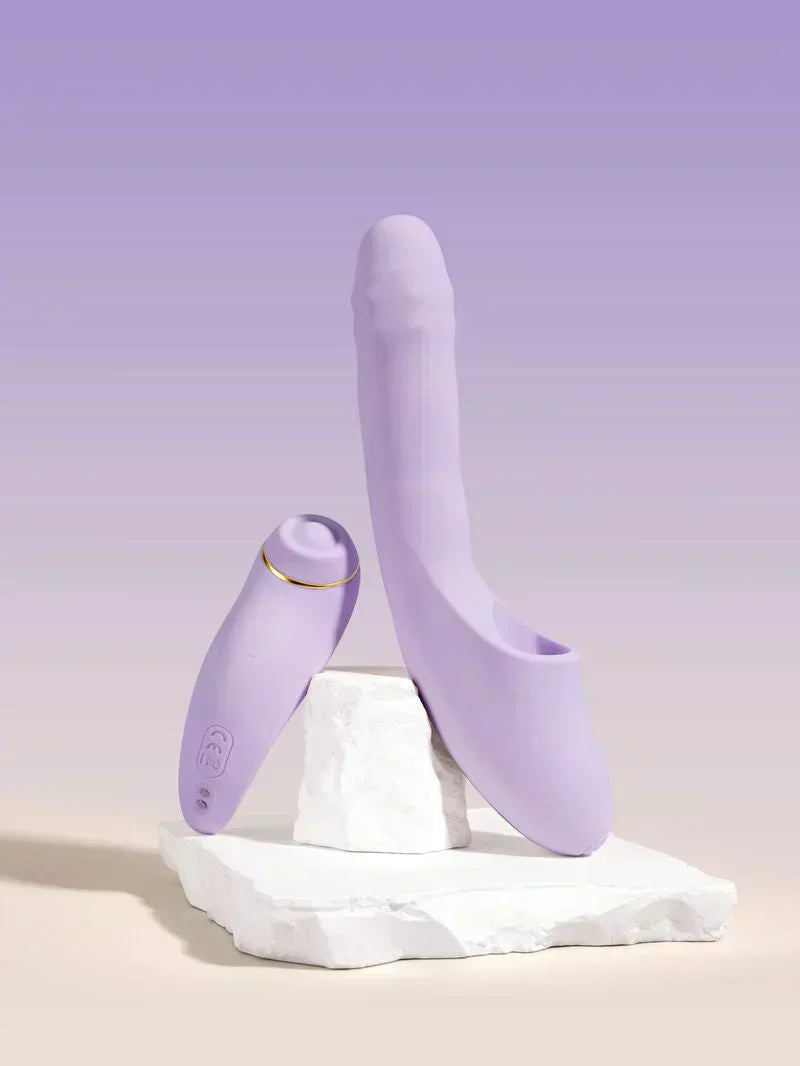
Recently, I had the opportunity to test SVAKOM Klitty, and what interested me most wasn't simply its technology it was the philosophy behind its design.
When reviewing pleasure products, I tend to look beyond trends or claims about intensity. What matters more to me is whether a product can support comfortable, pressure-free exploration.
That's exactly what I appreciated about Klitty.
Instead of relying on a single type of stimulation, it combines a gentle tongue-like motion with suction technology. These sensations can be used separately or together, allowing each person to explore what feels most pleasurable for their own body. What stood out to me during testing was the ability to adjust the two sensations independently rather than having to commit to one intensity or pattern.
One of the most important things I've learned while working with clients is that there is no universal formula for pleasure.
Every body is different.
Having the opportunity to experiment with different sensations, rhythms, and intensities helps people move away from the idea that there is one "correct" way to experience arousal or orgasm.

Why Quality Matters
When people decide to purchase their first pleasure device, they're often overwhelmed by the number of options available online.
My advice is always to focus on quality rather than quantity.
Choose body-safe materials.
Choose products from reputable manufacturers.
Choose devices designed with comfort, safety, and anatomy in mind.
These factors have a much greater impact on the overall experience than simply choosing the strongest motor or the highest number of vibration modes.
One of the details I appreciated about SVAKOM Klitty was its soft silicone finish and intuitive controls. The product feels thoughtfully designed, making it approachable even for someone who has never used a pleasure device before.
Another feature worth mentioning is the companion app.
It allows users to personalize stimulation patterns, synchronize vibrations with music, or even let a partner control the device remotely.
For couples in long-distance relationships, remote control can also offer another way to share an intimate experience while apart.
Of course, technology itself doesn't create closeness.
Communication does.
But when used intentionally, tools like these can support connection rather than replace it.
Sexual Wellness Is About Communication
People often assume that improving their sex life requires learning a new technique or buying a new product.
Sometimes that's true.
More often, however, what truly changes intimate relationships is conversation.
Questions such as:
"What feels good to you?"
"Would you like to try something new?"
"How can I help you feel more relaxed?"
can transform intimacy far more than any device ever could.
The healthiest relationships I've worked with aren't necessarily the ones having the most sex.
They're the ones where both partners feel emotionally safe enough to be honest about their needs, desires, and boundaries.
When that kind of communication exists, pleasure becomes something shared rather than performed.
There Is No "Right" Way to Experience Pleasure
One of the most meaningful parts of my work is helping people let go of unnecessary pressure.
There isn't one correct timeline for arousal.
There isn't one correct path to orgasm.
There isn't one correct way to enjoy intimacy.
Sexuality is deeply personal.
The more permission we give ourselves to explore without judgment, the easier it becomes to discover what genuinely feels good.
Sometimes that exploration happens through conversation.
Sometimes through mindful self-touch.
Sometimes with a thoughtfully designed pleasure device.
Each of these experiences can become part of a healthier relationship with our own body.
Final Thoughts
A vibrator isn't a replacement for intimacy.
It isn't a solution to every sexual challenge.
And it certainly isn't a measure of how healthy a relationship is.
Instead, it can become something much more valuable:
A tool for self-discovery.
A starting point for honest conversations.
An opportunity to better understand your own body and communicate your needs with greater confidence.
In my work as a sexologist, I've learned that the people who experience the greatest sexual satisfaction aren't those who chase perfection.
They're the ones who stay curious.
Because fulfilling sexuality doesn't begin with a product.
It begins with understanding yourself.